Why This 30-Second Facebook Ad Generated 8+ Applications in 9 Weeks
A frame-by-frame breakdown of the BOF ad that filled Jordan's pipeline, and the specific creative decisions that made it convert.
 Jordan, OzBroker
Generated
Per Lead
Submitted
Value
Watch the BOF#2 Ad That Generated 223 Leads
The actual creative that ran on Facebook. 9 weeks. 223 leads. $12.59 CPL. 8+ submitted applications.
Jordan
OzBroker
"The biggest difference is professionalism... the filming, the editing and the content is something I couldn't replicate myself."
Jordan, OzBroker
Most mortgage broker Facebook ads look the same: stock photo of a couple with keys, generic headline, CTA that says "Contact us today."
Jordan's ad did something different, and the results showed it. In just over 9 weeks, one piece of video creative generated more than 8 submitted mortgage applications, with a further dozen prospects lined up for the following month.
This breakdown explains exactly why it worked. Not just the results, but the specific creative decisions, the targeting logic, and the psychological principles behind each element. Whether you're a broker thinking about running ads or you're just curious about what good looks like, this is worth reading.
Watch Jordan's testimonial
Hear from Jordan directly about what changed in his business: the filming, the editing, and what the system delivered.
The Actual Campaign Results
Live from Facebook Ads Manager. BOF#2 Video — Jordan's primary ad.
| Ad Name | Delivery | Reach | Impressions | Clicks | Leads | CPL | Spent |
|---|---|---|---|---|---|---|---|
| Jordan Guo (All) | Active | 54,895 | 118,564 | 1,656 | 240 | $13.56 | $3,254.29 |
| BOF#2 Video (primary ad) | Active | 51,007 | 106,424 | 1,401 | 223 | $12.59 | $2,807.55 |
The Real Return
What does $2,807 in ad spend actually return?
8+
Loan Applications
~5
Est. Settled Loans
~$41K
Est. Lifetime Value
Avg loan size (loans.com.au)
$694,000
Upfront commission (0.6%)
$4,164
Trail over 4 yrs (0.15%/yr)
$4,164
Australians refinance every 3–5 years on average glassfinancial.com.au. Using 4 years as the midpoint, the lifetime value of a single settled client is:
8 applications × ~65% settlement
~5 settled loans
Conservative estimate
Total lifetime value
5 × $8,328 = $41,640
From $2,807 in ad spend
Estimated campaign ROI
1,384%
($41,640 - $2,807) ÷ $2,807 × 100
Commission rates based on industry standard 0.6% upfront and 0.15% trail. Loan size: loans.com.au. Refinance cycle: glassfinancial.com.au. Settlement rate is illustrative.
223 leads at $12.59 each — from one creative
One piece of video creative, one targeted audience, 9 weeks. The breakdown below explains exactly why it converts.
First: What is a Bottom-of-Funnel Ad?
Before breaking down the ad itself, it's worth understanding why it was built the way it was, because the funnel stage dictates everything.
A bottom-of-funnel (BOF) ad targets people who are already in market. They're actively thinking about buying a property, refinancing, or getting a home loan. They haven't hired a broker yet, but the decision is live in their mind.
Top of Funnel
Unaware. Build brand, educate, stop the scroll.
Middle of Funnel
Considering. Build trust with stories and case studies.
Bottom of Funnel ← This ad
In market. Ready to talk. Just needs a reason to choose YOU.
BOF ads don't need to educate. They need to interrupt, qualify, and convert. That's why Jordan's ad is 30 seconds, direct-to-camera, and closes with a specific call to action.
What Made This Ad Work
Five specific decisions. Each one deliberate, each one doing a job.

Seconds 0–2
The Hook: A Client's Own Words
The ad opens in black-and-white with a single sentence in large orange italic text: "Jordan, I don't think I can afford anything."
This isn't Jordan bragging. It's a real objection from a real client, and it's almost certainly the same thought running through the head of the person watching the ad.
In 2 seconds, without Jordan saying a single word, the ad has done something most broker ads never achieve: it has made the viewer feel seen.
Why this works
The B&W colour grade signals "this is different" before a word is spoken. The client quote as an opening hook is called a "voice-of-customer" pattern. It's one of the highest-converting ad frameworks because it mirrors the viewer's exact internal dialogue. You're not selling to them; you're acknowledging them.
Seconds 5–20
The Creative: Professional But Human
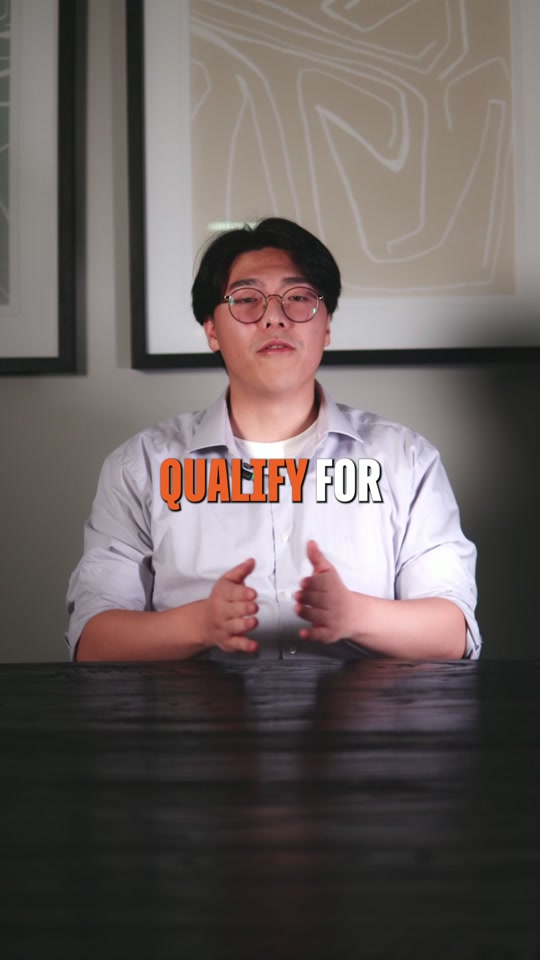
Once the hook plays, the ad cuts to Jordan in colour, speaking directly to camera from a dark wooden desk, professional art prints behind him, clean lighting, a lapel mic visible on his collar.
The kinetic captions emphasise key words in bold white text, occasionally popping to orange for the most important phrases: CONSTANTLY. EVERYONE. PROPERTY. QUALIFY FOR. YOUR OPTIONS. FIRST TIME. WHAT YOU. NOT AFTER. AND START.
This is the most important thing to understand about modern mortgage broker advertising: you can't fake production quality on a six-figure home loan decision. The production isn't there to look fancy. It's there to signal trust.
Why this works
Mortgage decisions are one of the highest-trust purchases a person makes. Studies on trust and financial services show that video credibility is assessed in the first 3 seconds. Professional lighting, clear audio, and composed framing all register subconsciously as signals of reliability. The kinetic captions keep retention high on muted feeds, where most social media video is consumed.
The Core Message
What clients think
"I can't afford to buy."
What Jordan shows
"Here's what you actually qualify for."
The Message: Addressing the #1 Blocker
The entire 30-second script pivots on one insight: the biggest reason people don't contact a mortgage broker isn't laziness. It's the belief that they're not ready or that they won't qualify.
Jordan's ad tackles this head-on. Reconstructed from the kinetic captions, the message goes something like: "I hear this constantly from everyone: 'I don't think I can afford anything.' Let me show you what you can actually qualify for. Not after years of saving. Your options as a first home buyer, what you need to know, and start today."
This is not a loan pitch. There are no rates, no comparisons, no promises. It's a permission structure: "you're allowed to talk to me even if you think you can't afford it."
Why this works
This is compliant mortgage broker messaging done right. No outcome promises, no rate claims, no "we'll get you approved." Instead: genuine education that removes fear. Under ASIC RG 234 guidelines, this approach is both safe and effective, and it's the approach that converts browsers into booked appointments.
Audience targeting
The Targeting: Reaching In-Market Buyers
Great creative shown to the wrong audience gets zero results. This ad worked partly because the audience parameters matched the message: people actively considering property purchases in Australia, signalled by their recent online behaviour, interests, and demographic profile.
Meta's machine learning is powerful, but it needs constraints. "Targeting everyone in Australia aged 18–65" sounds inclusive. In practice it's expensive and largely wasted. BOF ads need tighter audiences, people with purchase intent signals, not just general financial interest.
The ad targets the specific mindset captured in the hook: someone who wants to buy but believes they can't. That's a specific, identifiable audience on Meta, and it's worth paying to reach.
Why this works
The message and the audience alignment is what drives low cost-per-lead. When the hook mirrors the viewer's exact thought ("I don't think I can afford anything"), the ad feels native, not intrusive. That's the signal Meta's algorithm rewards with lower CPMs and better delivery to the right people.
Speed to Lead
The System: Automated Follow-Up That Keeps Leads Warm
The ad fills the top of the pipeline. The system converts it.
When a lead fills in the form, they get an automated SMS within minutes and a personalised email shortly after. That means even if Jordan gets back to them later that day or the next morning, the lead hasn't gone cold: they've already received a warm acknowledgement and know Jordan's team is on it.
On top of that, any lead that doesn't book immediately gets pulled into an email nurture sequence and retargeted with ads, so old leads don't just disappear, they get worked.
Why this works
Research consistently shows the first responder wins 35–50% more deals in competitive service markets. In mortgage broking, where comparison shopping is common, the broker who responds first, with a warm, personalised message, positions themselves as the obvious choice before the prospect has time to look elsewhere.
What This Means for Your Business
The principles behind Jordan's campaign aren't unique to him. They're replicable, but only if every piece is in place:
A hook that mirrors the viewer's exact thought
Not your offer, their fear. The ad earns attention by meeting people where they already are.
Professional video that builds trust in 3 seconds
Production quality is a trust signal for big financial decisions. You cannot shortcut this.
Compliant messaging that still converts
No rate promises, no outcome guarantees. Instead: education that removes the fear of asking.
A follow-up system that responds in minutes, not days
The ad brings the lead. The CRM automation converts them before they cool off.
Jordan's pipeline didn't fill itself because he had good intentions. It filled because every piece of the system, the creative, the targeting, the follow-up, was built to work together. That's the difference between running ads and running a lead generation system.
Want a Campaign Built Like This for Your Business?
We build the strategy, produce the video, run the ads, and set up your CRM follow-up. You focus on the conversations.
15 minutes. No obligation. We'll tell you honestly if we can help.
Related Reading
Joseph: 3 Applications in His First Month with a MOF Strategy
How the mid-funnel approach works for newer or lesser-known brokers.
BlogDo Facebook Ads Work for Mortgage Brokers?
The honest answer, and what separates winners from budget-wasters.
BlogWhy Most Mortgage Broker Ads Fail
The 5 mistakes this campaign avoided, and how to fix yours.