Why This Client Story Ad Got Joseph 3 Applications in His First Month
A breakdown of the mid-funnel storytelling strategy that turned a cold audience into enquiries. Why "most brokers would've just..." is the most powerful line in any mortgage ad.
 Joseph Bakhos
Generated
Per Lead
Month 1
Value
Watch the MOF#3 Ad That Generated 106 Leads
81 seconds. Cold audience. 106 leads at $17.14 CPL in 5 weeks.
Joseph Bakhos · MortgageWorks
Most new mortgage brokers make the same mistake with their first ad: they go straight for the hard sell.
"Call me for your home loan." "Get pre-approved today." "Best rates, call now."
These ads don't work on cold audiences. People who don't know you, have never heard of you, and have no reason to trust you yet. And for a broker who's newer or building a brand, almost every potential client starts cold.
Joseph's campaign took a completely different approach. Instead of selling, it demonstrated expertise through a real client story. And in just over five weeks, that single piece of creative had generated three submitted mortgage applications. A full pipeline for a broker in his first month of paid advertising.
This breakdown focuses on one principle
While Jordan's BOF breakdown covers the mechanics of conversion (hook, creative, targeting, follow-up), this breakdown is about a single, more important question: how do you get strangers to trust a broker they've never heard of? Joseph's ad answers this, and the answer applies to almost every broker in Australia.
The Actual Campaign Results
Live from Facebook Ads Manager. MOF#3 — Joseph's primary ad.
| Ad Name | Delivery | Reach | Impressions | Clicks | Leads | CPL | Spent |
|---|---|---|---|---|---|---|---|
| Joseph Bakhos (All) | Active | 51,346 | 87,347 | 1,523 | 111 | $17.07 | $1,894.52 |
| MOF#3 (primary ad) | Active | 50,384 | 84,714 | 1,411 | 106 | $17.14 | $1,817.29 |
106 leads at $17.14 each, from one creative
One story-driven video ad. One cold audience. One month of running. The breakdown below explains exactly what made it land.
The Real Return
What does $1,817 in ad spend actually return?
3
Applications
Month 1
~2
Est. Settled
Loans
$22K+
Confirmed
Value
Joseph's confirmed loan
$950,000
Upfront commission (0.6%)
$5,700
Trail over 4 yrs (0.15%/yr)
$5,700
Australians refinance every 3 to 5 years on average (glassfinancial.com.au). Using 4 years as the midpoint, the total lifetime value of a settled client is:
Month 1 confirmed
3 applications submitted
~2 settled x $11,400 = $22K+
Full pipeline (106 leads x 8%)
~8 settled loans projected
8 x $11,400 = $91,200
Month 1 ROI (confirmed only)
1,155%
($22,800 - $1,817) / $1,817 x 100
Projected full-pipeline ROI
4,919%
($91,200 - $1,817) / $1,817 x 100
Commission rates: 0.6% upfront, 0.15%/yr trail (industry standard). Loan size based on Joseph's confirmed $950K settlement. Refinance cycle: glassfinancial.com.au. Settlement rates are illustrative.
Why Cold Audiences Need a Different Approach
A middle-of-funnel (MOF) ad targets people who are broadly aware they might need financial help, but haven't made a decision yet. They're not searching "mortgage broker near me." They're living their life, and your ad appears in their feed.
The problem with cold audiences is simple: trust doesn't exist yet. You're a stranger asking them to share their financial situation. No amount of "call me now" messaging overcomes that. What overcomes it is proof that you know what you're doing, shown through a real client story before any ask is made.
What doesn't work on cold audiences
- ✗"Get pre-approved today" CTAs
- ✗Rate comparisons or financial promises
- ✗Headshots with contact details only
- ✗Generic "I'm a mortgage broker, call me"
What works on cold audiences
- ✓Real client stories showing your thinking
- ✓Demonstrating expertise without selling
- ✓A soft CTA ("learn more" not "buy now")
- ✓Making the viewer think "I didn't know that"
Joseph's ad does all four things in the green column. In 81 seconds, without promising a single outcome, without mentioning a rate, and without asking for anything until the very end.
The Client Story That Built the Trust
Here's exactly what happens in the ad, and why each beat works.
Opening with someone else's mistake
The ad opens on a young woman (not Joseph) with a caption overlaid: "to drain her savings and buy a $700K property."
This is a pattern interrupt. Instead of introducing himself, Joseph leads with a relatable scenario: someone about to make a significant financial decision. If you've ever worried about draining your savings to buy property, or know someone who has, you keep watching.

Why it works
Leading with a character other than yourself instantly removes the "sales pitch" feeling. The viewer is watching a story, not being sold to. Engagement rates on story-led hooks are significantly higher than talking-head introductions, especially on cold audiences who don't know the broker.
The situation that almost went wrong
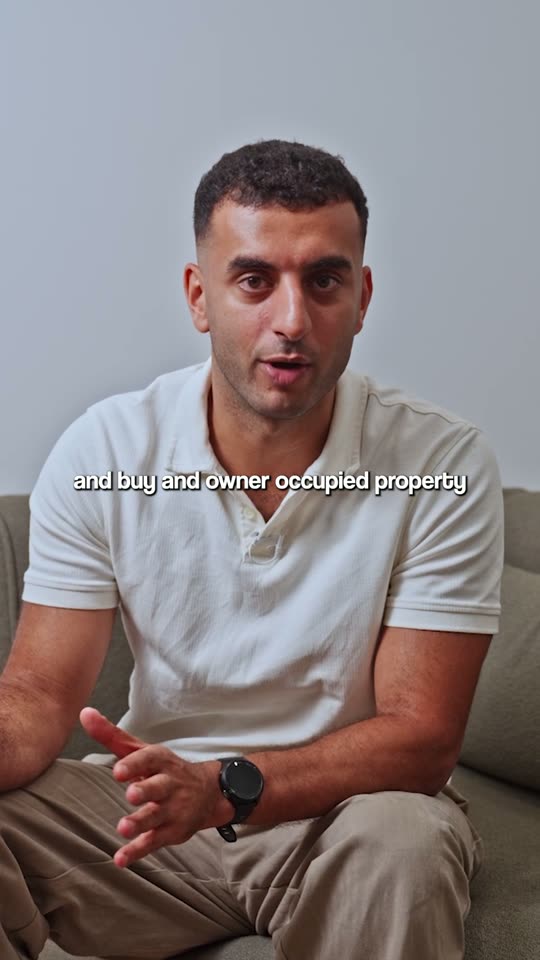
Joseph then speaks directly to camera from his couch. Relaxed, casual, conversational. He describes the client's situation: she'd come to him wanting to drain her entire savings to purchase a $700K owner-occupied property.
He doesn't judge her. He doesn't say it was a bad idea. He simply presents it as the starting point, and signals that something better was possible.
Why it works
The couch setting is deliberate. It signals approachability and removes the formal "broker in a suit" dynamic that many borrowers find intimidating. Joseph comes across as a knowledgeable friend, someone you'd feel comfortable asking a "dumb question" to. This is one of the most underrated trust signals in financial services marketing.
The moment that separates him from every other broker
This is where Joseph does something most brokers would never have done: he challenged her plan. He proposed buying an investment property instead of an owner-occupier, brought her parents in as guarantors, and restructured the entire approach.
The result? Her borrowing power increased. She went from a $700K owner-occupier in one suburb to a $950K interstate investment property, better location, better asset, actually growing in value.
Loan settled
$950,000
Upfront commission (0.6%)
$5,700
And then comes the line that makes the whole ad: "Most brokers would've just..."
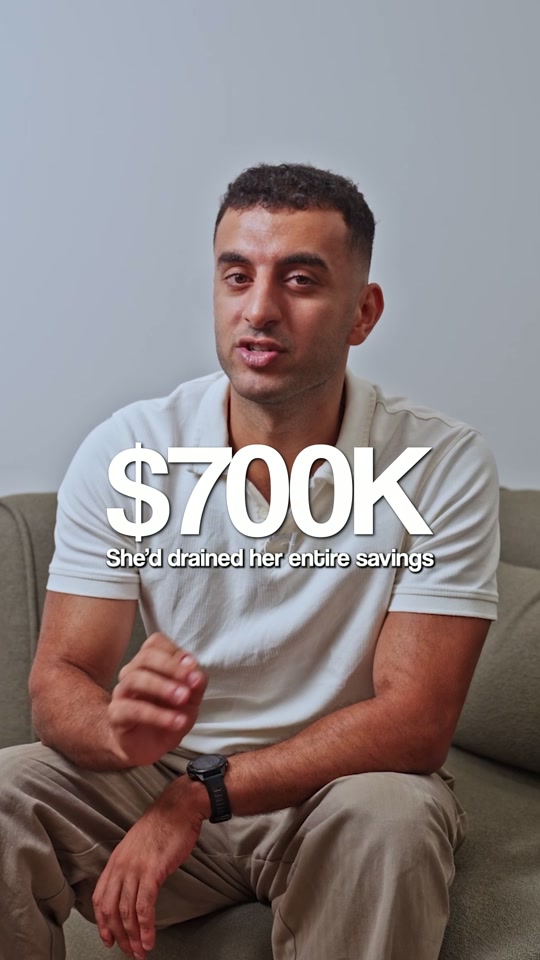
The most important six words in the ad
"Most brokers would've just..." is an implicit comparison that tells the viewer everything they need to know: Joseph thinks differently. He doesn't just process your loan. He interrogates whether your plan is actually the right one. This single sentence does more positioning work than any tagline could.
The proof: better property, better location, better investment
Joseph reveals the outcome with animated bullet points appearing one by one on screen:
The ad closes with Joseph referencing "that customer", signalling an ongoing relationship, not a one-time transaction.
Why it works
The animated bullet points are a visual proof device. By the time someone reaches this part of the ad (60+ seconds in), they're invested, they want the outcome. The bullet points confirm it concisely, and the frame-by-frame reveal creates a micro-satisfaction response that reinforces the memory of Joseph as someone who delivers results.
The Real Reason This Ad Converted
Strip away everything else and this ad succeeds for one reason: it shows Joseph's thinking, not just his services.
What most brokers advertise
"We find you the best rate." "Access to 40+ lenders." "Fast approvals." These are category claims, every broker says them. They give the viewer no reason to choose you over any other broker.
What Joseph's ad shows
"Here is a real situation, here is what most brokers would've done, here is what I did differently, and here is the outcome my client got." That's not a claim, that's a demonstration. And demonstration always out-converts assertion.
The Principle: Show Your Thinking, Not Your CV
Mortgage borrowers don't lack access to brokers. They lack a way to evaluate them. Websites look the same. LinkedIn profiles look the same. "20 years of experience" means nothing to someone who doesn't know how to assess experience.
But a 90-second video where a broker walks through a real client scenario, what they saw, what they questioned, what they proposed, and what the client gained, gives the viewer a window into how that broker's mind actually works.
That window is the ad. That's why it converts cold audiences. And that's why it worked in Joseph's first month.
Why 81 Seconds? (And Why Longer Can Win)
The conventional wisdom in social media advertising is "shorter is better." And for BOF ads targeting people who already know they want a broker, that's often true. Jordan's 30-second direct-response ad is perfect for that stage.
But for MOF, where you're warming up a cold audience, length is not the enemy. Boredom is the enemy. If every second of the ad is earning attention, 81 seconds is exactly long enough to tell a story that sticks.
Joseph's ad earns each second: an intriguing hook, a situation that builds, a pivot you didn't see coming, and an outcome that makes you think "I want a broker who thinks like that."
What the retention curve probably looks like
Illustrative, actual retention varies. The point: every beat has a job to earn the next second.
What Every Broker Can Take From This
You don't need to be famous. You don't need a massive ad budget. You don't need to promise anything you can't legally deliver. You need one thing: a real story that shows how your mind works.
Start with a client situation, not your credentials
Credentials are unverifiable to a stranger. A specific scenario is relatable, memorable, and convincing in a way a bio never is.
Find your "most brokers would've just..." moment
Every experienced broker has a story where they saw something others missed. That story is your most valuable marketing asset.
Make the setting work for you, not against you
Joseph on a couch is more trustworthy to a first home buyer than Joseph at a glass desk. Know your client and match the energy they need to feel comfortable.
Build the funnel around the story, not just the CTA
The MOF story builds trust. BOF retargeting then converts that trust into appointments. They work together, you need both stages.
Joseph's first month in paid advertising was successful not because he got lucky, but because the creative was built around a principle: demonstrate expertise before making any ask. That principle scales. The story changes; the principle doesn't.
Have a Story Like This Sitting in Your Head?
We'll help you find it, script it, film it, and run it. Then we'll build the targeting and follow-up system that turns viewers into booked appointments.
ASIC-compliant. Done for you. Performance-focused.
15 minutes. We'll map out exactly what we'd run for your business.
Related Reading
Jordan: 8+ Applications in 9 Weeks, BOF Breakdown
The direct-response strategy once your audience already trusts you.
BlogThe Simple Lead Generation Funnel Every Broker Should Have
How MOF and BOF work together in a full funnel.
BlogHow Mortgage Brokers Actually Get Consistent Leads in Australia
The full system behind predictable pipeline growth.